
A few months ago I built a member platform for Deaf in Government on ten donated Salesforce Enterprise seats. The public application was Laravel. Salesforce sat behind it as the system of record, permissions engine, workflow layer, governance engine, event bus, and audit substrate.
I thought the architecture was interesting enough to write up on Reddit. On the morning of
February 24, 2026, under my account u/mcc0nnell, I posted a technical walkthrough
to r/salesforce with a title that now looks slightly ridiculous in retrospect:
Headless Salesforce on 10 Free Nonprofit Seats — Here’s the Full Stack.
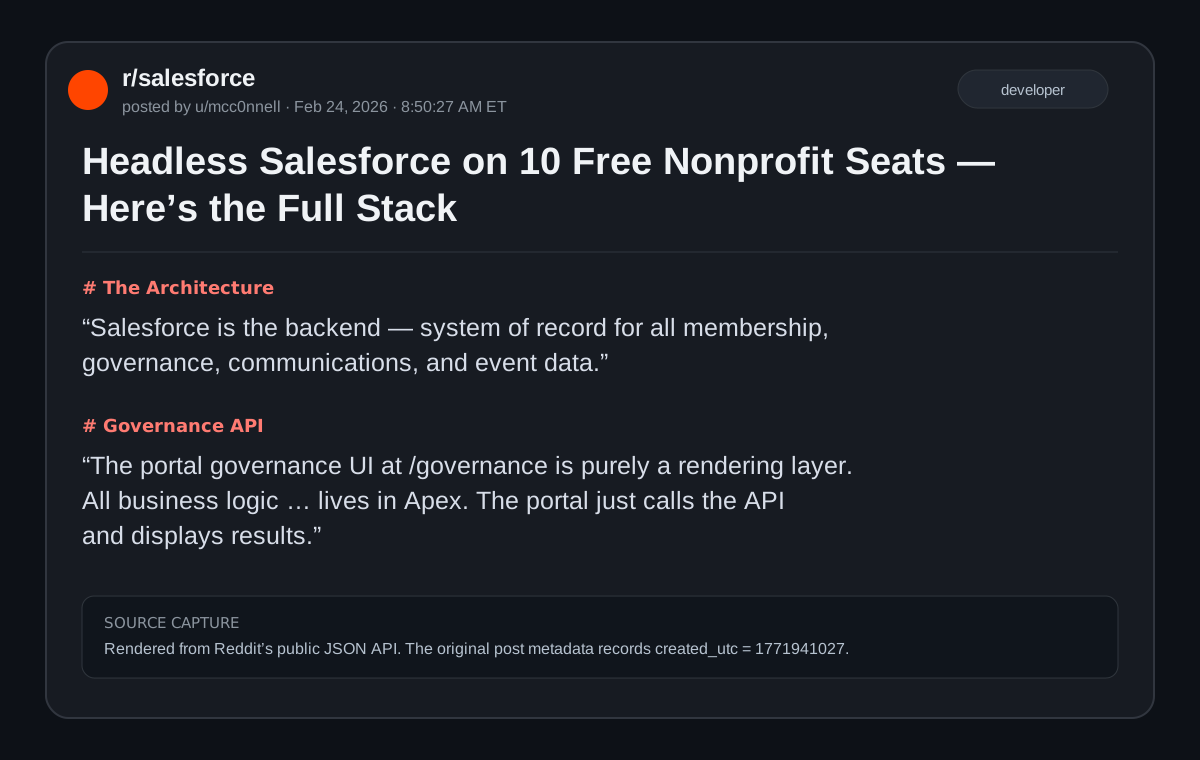
created_utc. The timestamp converts to
February 24, 2026 at 8:50:27 a.m. Eastern.
The wording matters because I was not using headless to mean “there is an API.” I was making a platform-level claim. I wrote that “Salesforce is the backend” and that the portal governance UI was “purely a rendering layer.” The business logic stayed in Apex. The external application called the APIs and displayed the result.
In the comments I made the abstraction even more explicit: Salesforce already shipped Platform Events, Apex REST, Custom Metadata Types, Connected Apps, identity, permissions, and automation. The toolkit was already there. The mental shift was to treat Salesforce as a headless backend instead of the entire application.
This is not an invention story
Salesforce did not discover APIs because of a Reddit post. It had offered headless Commerce, CMS, Identity, and enormous integration surfaces for years. More importantly, Salesforce was already moving its data and business logic behind other interfaces before February 2026: Slack, ChatGPT, Claude, agents, and other surfaces.
Salesforce also says the engineering decision to rebuild the platform for agents began roughly two and a half years before the Headless 360 announcement. That is excellent evidence against the fun but unsupported theory that somebody saw my thread and invented the product from it.
The interesting question is narrower: when did Salesforce itself begin publicly naming the platform-level abstraction “Headless”?
I publicly described the platform-level pattern as “Headless Salesforce” before Salesforce publicly adopted Headless 360 as its own positioning.
The control dates
I went back through Salesforce’s own dated material looking for evidence that would kill the story. The result is more interesting than a search-engine chronology.
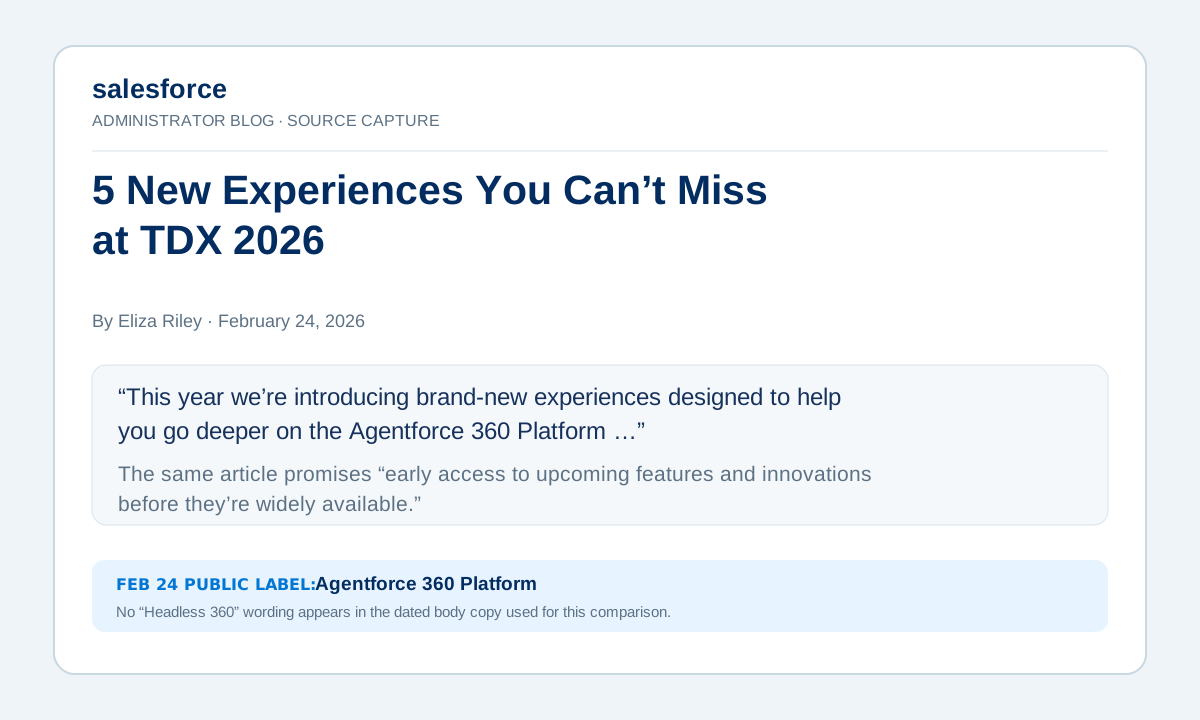
Start with the exact day of my post. On February 24, Salesforce Admins published a TDX preview. Its framing was still the Agentforce 360 Platform, and it advertised sneak peeks of upcoming products and roadmap work.
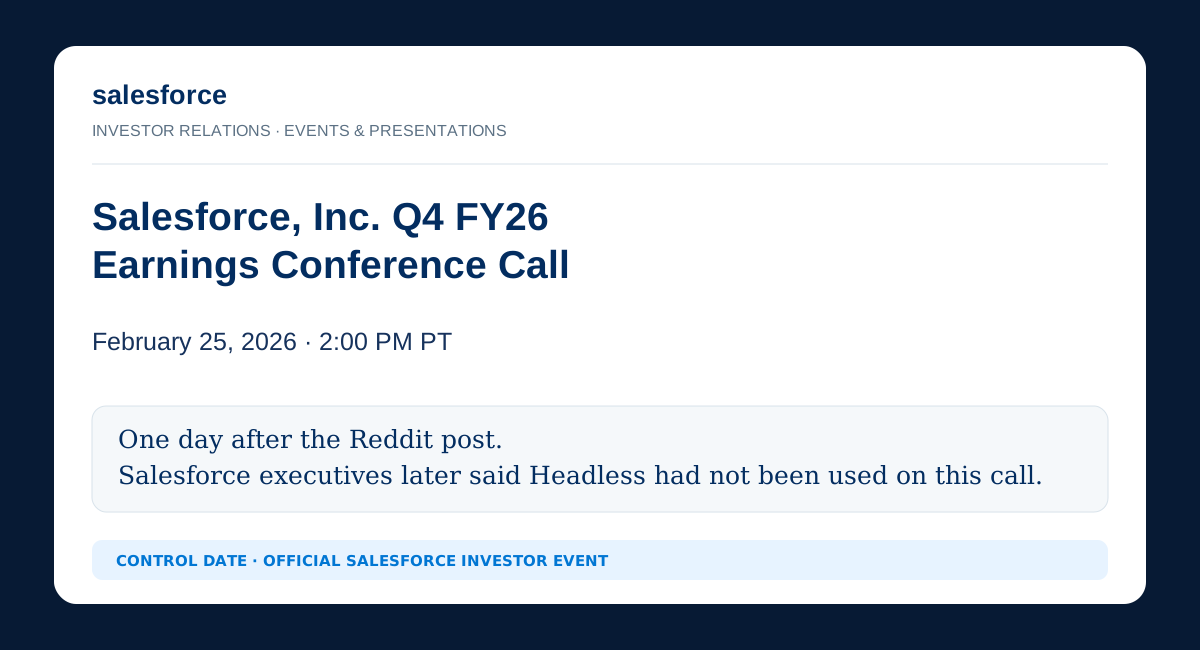
The next day Salesforce held its Q4 FY26 earnings conference call. At the time, this was just another control point. Three months later it became much more important.
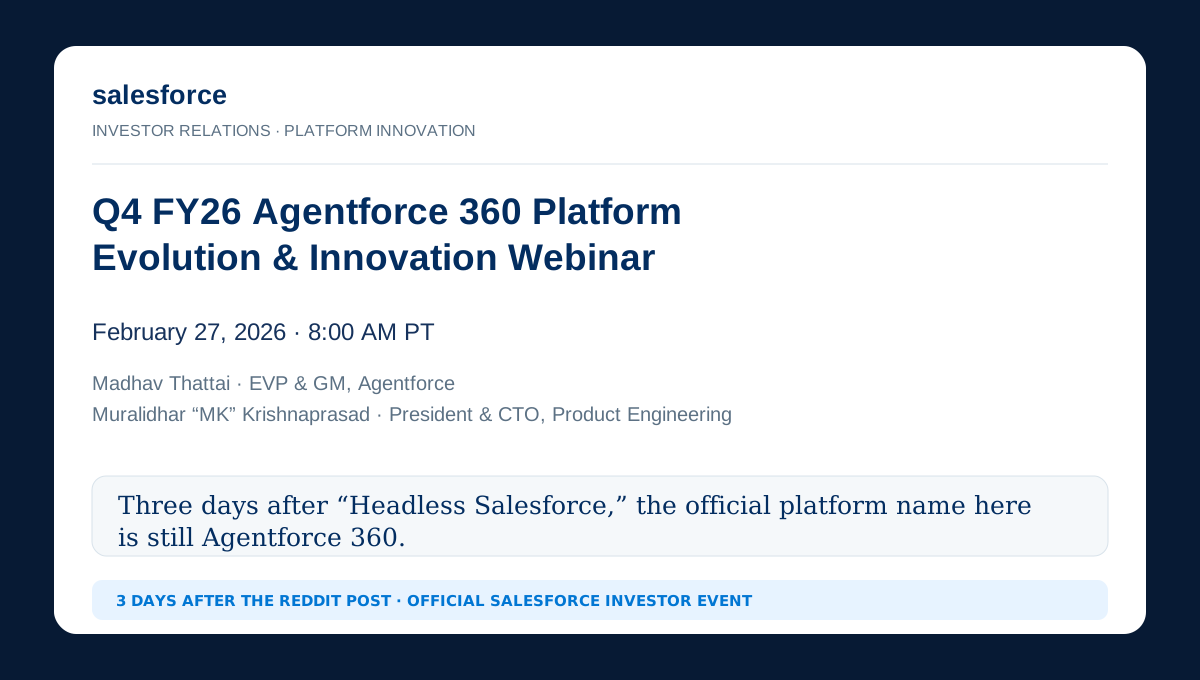
And on February 27, Salesforce held a webinar specifically about platform evolution and innovation. This is the cleanest contemporary naming control I have found because it was not a generic marketing page. It was an official investor event featuring senior Agentforce and product-engineering leadership.
Fifty days
On April 15 — the opening day of TDX 2026 — Salesforce made the new positioning unmistakable: “Introducing Salesforce Headless 360. No Browser Required.”
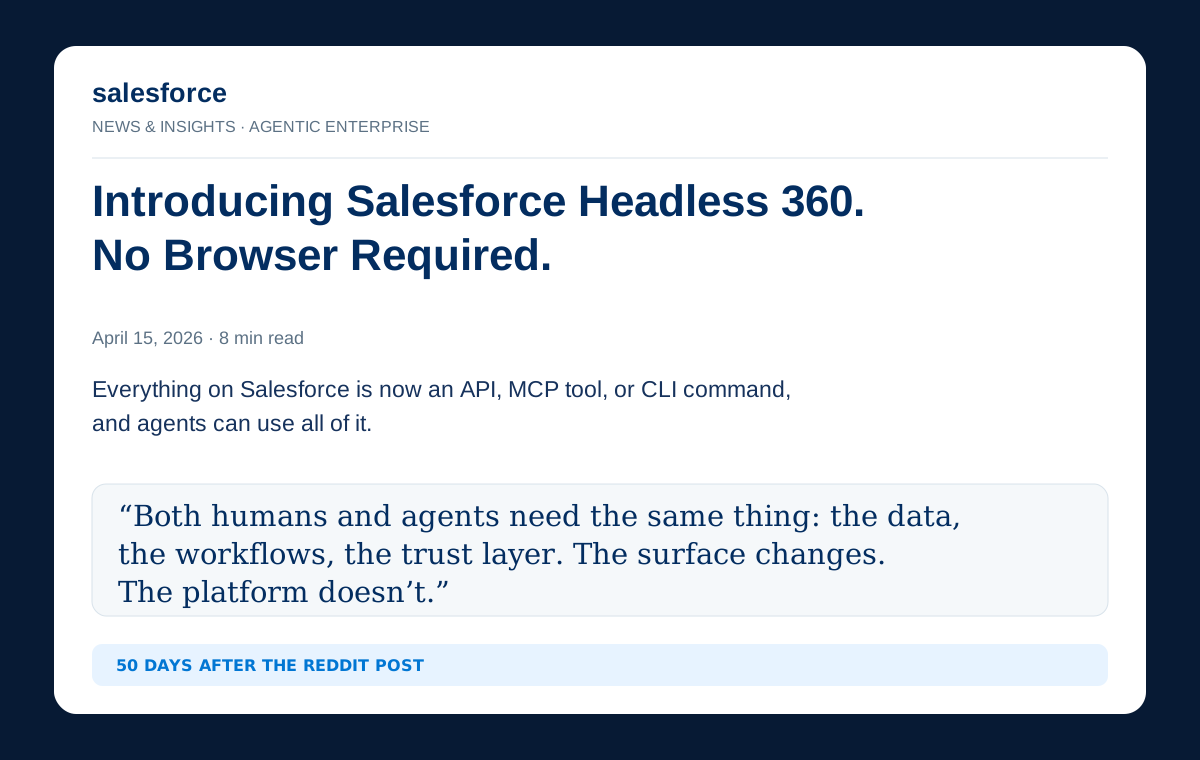
This is why the resemblance caught my attention. It is not merely the word headless. It is the abstraction boundary.
My February version was: Salesforce is the durable backend — records, permissions, workflows, business logic, events — while the external application is a replaceable rendering layer. Salesforce’s April version makes essentially the same architectural move at platform scale: expose the platform programmatically and let the surface vary.
The thing worth claiming is not invention. It is recognition.
Then Salesforce gave us the missing timestamp
On May 27, Salesforce reported its next quarter. During the earnings call, President and Chief Marketing Officer Patrick Stokes was asked about Headless. His answer turned the chronology from an exercise in negative searching into first-party evidence.
Stokes said the team had checked what it had said about Headless on the prior earnings call and realized it had not discussed it because Salesforce was still preparing the TDX launch. Marc Benioff interjected that they were not sure the company had even used the word. Stokes agreed: “We hadn’t even used the word yet.”
A few minutes later Benioff described that quarter as the one in which Salesforce used the word headless for the first time and tied the public positioning to TrailblazerDX and his own social post.
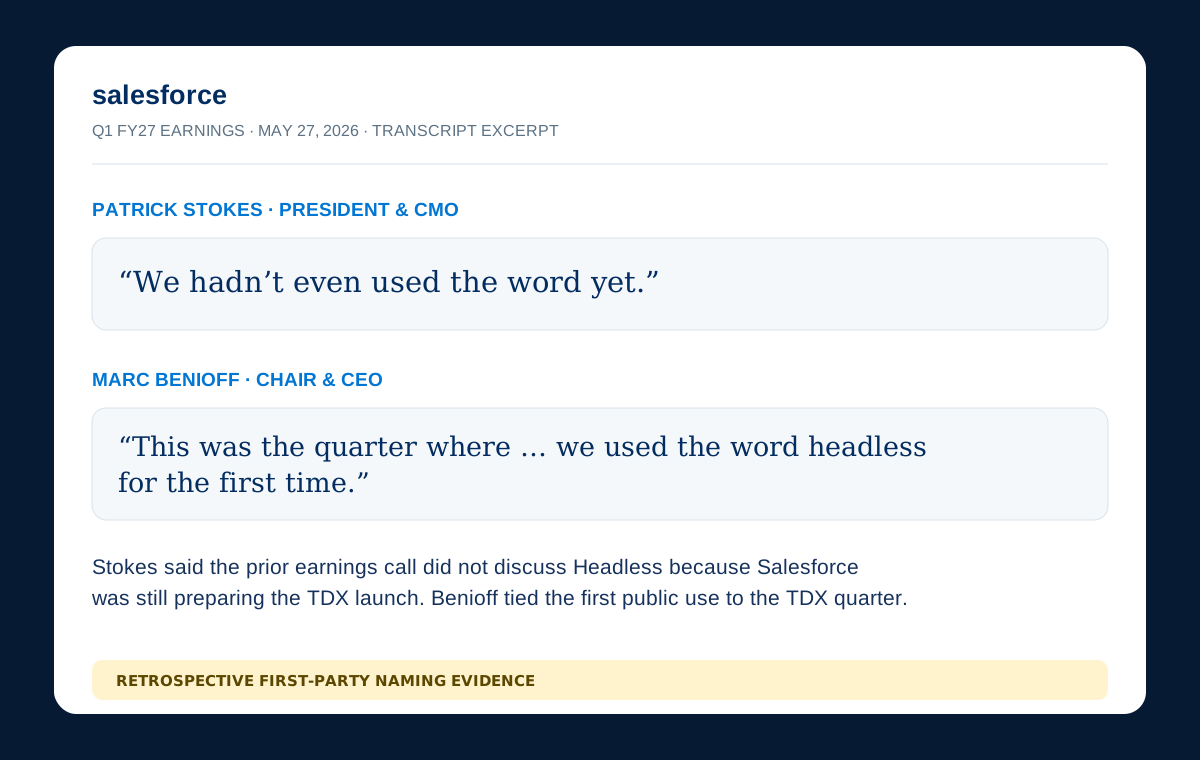
That does not tell us when somebody inside Salesforce first thought of the name. Product and marketing teams can work on positioning privately for months. It does, however, give us something much stronger than “I searched Google and did not find an earlier page.”
Salesforce’s own CEO and CMO later remembered the public Headless terminology as new in the TDX quarter, after my February 24 post.
The March 13 trap
An earlier version of this article said “seventeen days later.” During the investigation, a Salesforce article carrying a March 13 publication date surfaced with copy referring to the “Headless 360 platform.” At first glance that looked like a clean first-use date.
I no longer treat it that way.
Salesforce pages are living documents. Evergreen navigation and body copy can be updated without changing the original publication date. Contemporary March developer material still organizes the same TDX platform work under Agentforce 360 Platform, while Salesforce’s April 15 announcement presents Headless 360 as newly introduced. The May executive exchange points in the same direction.
Without a preserved pre-April snapshot proving that the relevant words were actually present on March 13, the publication date is not a text-provenance date. So the 17-day claim comes out. The hard public interval is the one I can defend: February 24 to April 15 — fifty days.
A page date proves when the page was published. It does not prove when every sentence currently on that page was added.
The employee-flair detail
There is still one detail that makes the story fun, but it should not carry the argument. An account participating directly in my Reddit thread carried the subreddit flair “Salesforce Employee.” Reddit’s JSON preserves that flair value on the comments.
In that conversation I described the mental shift as treating Salesforce as a headless backend rather than the whole application.
That establishes a possible public transmission path. It does not establish transmission. I have not independently identified that person, verified their employment, tied them to product marketing, or found evidence that they sent the thread anywhere inside Salesforce.
With the May earnings-call evidence, I do not need that detail to make the chronology work. It belongs where it is most honest: as an intriguing footnote.
The uncomfortable part is the product boundary
The copying question is almost a distraction. The more interesting thing I had done on Reddit was define Salesforce in a way that did not require Salesforce’s own interface.
From the customer side, that is an architectural escape hatch. Keep the durable parts — records, identity, permissions, workflows, events, Apex, auditability — and replace the experience layer. Salesforce becomes infrastructure. The customer decides what the application looks like, where it runs, and even whether the user ever knows Salesforce is underneath it.
That moves the product boundary. A platform company normally gets to tell the market what its product is. My post was saying, without much ceremony, that the useful boundary was already somewhere else: below the browser, below the standard UI, down at the governed enterprise substrate.
If anyone on the relevant Salesforce product or marketing teams saw the thread, I can imagine why that framing might have been uncomfortable without anyone being angry about it. The reactions could have ranged from recognition — this person sees where the architecture is going — to narrative anxiety — we should define what “headless Salesforce” means before customers define it for us — to simple competitive irritation at someone saying the quiet part loudly and with enough specificity that other builders could follow it.
I have no evidence that any of those reactions actually happened. I do not need them to have happened for the market inversion to be real.
I described the escape hatch. Salesforce turned the escape hatch into the product.
Headless 360 is an elegant answer to the apparent escape. Fine: leave the Salesforce browser. Replace the Salesforce surface. Build in React, Slack, an agent, a mobile app, or something Salesforce did not design. But the data, workflows, permissions, business logic, trust, and governance underneath are still Salesforce.
In other words: you can escape the Salesforce interface without escaping Salesforce. The escape hatch becomes another entrance to the platform.
So did Salesforce read my Reddit post?
I still have no idea.
I can prove the post existed on February 24. I can prove what I called the architecture and how I described it. I can show that Salesforce’s public platform material around that date still used Agentforce 360. I can show a February 27 investor webinar explicitly named Agentforce 360 Platform. I can show the April 15 Headless 360 launch. And now I can point to Salesforce’s own CEO and CMO later describing the Headless terminology as new in that launch quarter.
I cannot prove that anyone responsible for the product name or campaign saw my post. I cannot prove influence. And because Salesforce had been building toward this architecture for years, I would not claim credit for the platform even if someone in marketing had read the thread.
As far as the public record I can establish shows, I publicly called the platform-level pattern “Headless Salesforce” before Salesforce’s own retrospective account of when it began publicly using the Headless positioning.
Maybe this was simple convergence. Maybe somebody noticed. The evidence does not answer that question.
What the evidence does show is stranger, and more durable than a copying story. On February 24, I described Salesforce as infrastructure hiding underneath a replaceable interface. I was not asking permission to define the platform that way. I was just building on it that way.
Fifty days later, Salesforce launched Headless 360 and began telling the market that the replaceable surface was not an escape from Salesforce at all. It was part of Salesforce.
I described the architectural escape hatch from Salesforce. Salesforce made the escape hatch part of Salesforce.