The right came first. Then we had to build the system.
A twenty-year systems timeline of Deaf communications, governance, architecture, regulation, testing, and the long move from access as a promise to access as infrastructure that can prove itself.
Accessibility is not a patch. It is the architecture that survives contact with reality.
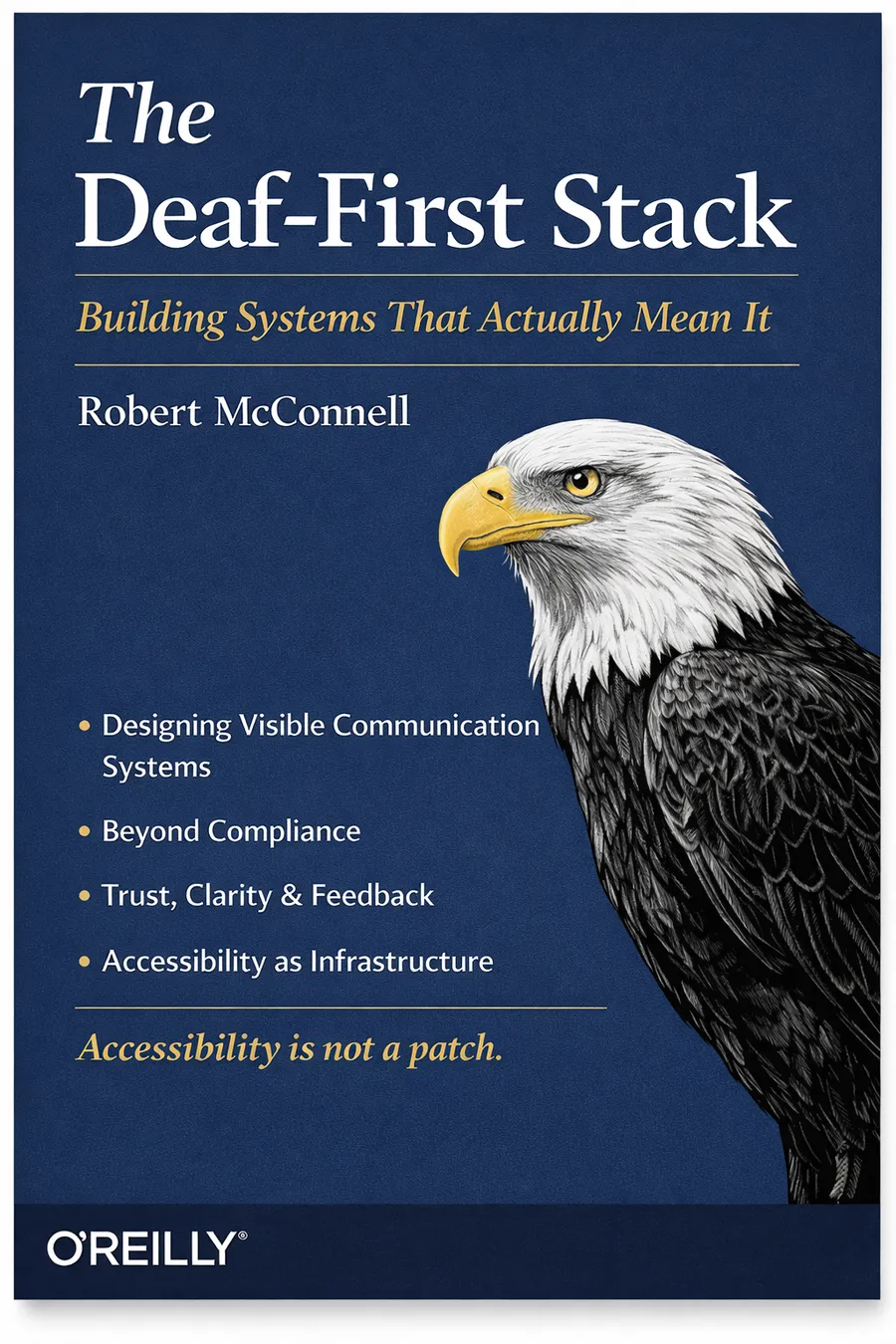
Concept cover · not a publication
A self-made mockup in O'Reilly's cover format. There is no such book, and no affiliation with O'Reilly Media. The thesis is real; the spine is not.
RIGHTGOVERNBUILDROUTETESTPROVE
This is not a résumé
Follow the ideas, not the job titles.
The useful story is the lineage: the same systems questions recur at higher levels of sophistication. Who has legitimacy? What makes an institution trustworthy? When should communication be direct? How does one network discover another? Who tests the claim? What evidence survives the handoff?
The page is built to be read as a system assembling itself. The line beside each event carries the structure that existed by that year — one hairline in 2006, a bus by 2012, a measurement rule by 2026.
Documentedprimary/public record anchor
Inheritedstrong architectural lineage
Working edgecurrent synthesis or research hypothesis
Inside Higher Ed reported from Gallaudet on May 1, 2006, within hours of the presidential announcement, and identified Robert McConnell as chief of staff of the Student Body Government. McConnell said the president of Gallaudet “has to be an ambassador for the entire deaf community” and distinguished the emerging protest from Deaf President Now: “We want to have a voice.”
Before architecture comes authority: who has a voice in the decision, and why should anyone trust the process?
Evidence note
Inside Higher Ed, “A Sign of Change at Gallaudet,” May 1, 2006, contemporaneously identifies McConnell, his SBG role, and both quotations. The later Mall-stage sequence remains separately preserved in first-person recollection.
After protest came responsibility. Gallaudet entered the 2007–08 academic year on Middle States probation. The institutional problem was no longer only whether leadership was legitimate, but whether shared governance and the university itself could demonstrably function.
Gallaudet archive · 2007–08
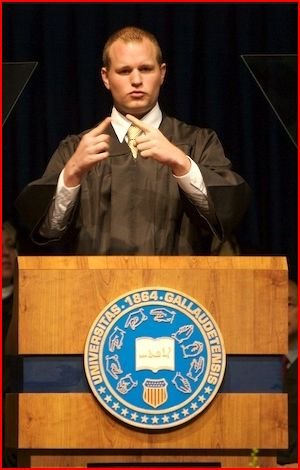
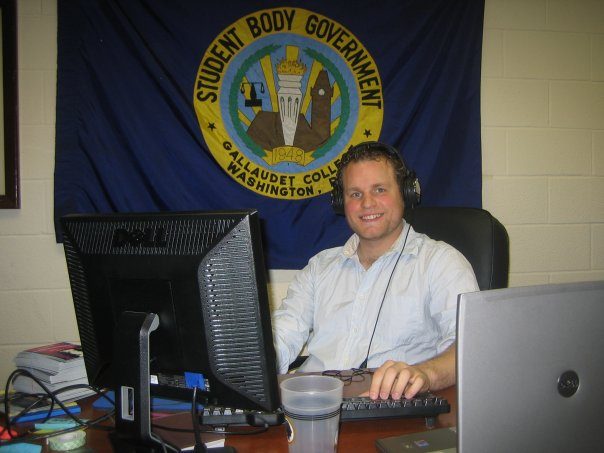
Two surviving Student Body Government-era photographs: the podium, and the working office behind it. Neither is claimed to depict the May 2006 gathering on the Mall.
SBG era · podium
Student Body Government-era photograph. The image later traveled forward in the archive as part of the personal and Gallaudet photo package assembled for a 2012 RIM/BlackBerry production.
SBG era · office
The Student Body Government office from the same personal archive. Governance as an ordinary room with ordinary work in it.
A claim of legitimacy is not enough. Institutions survive external scrutiny by producing evidence that governance works.
Evidence note
Middle States action history documents probation in June 2007, the lifting of probation and downgrade to warning in November 2007, and removal of the warning with accreditation reaffirmed on June 26, 2008.
May 2009: “For a future that’s telecommunications accessible.”#
Karen Peltz Strauss signed a copy of A New Civil Right with that inscription. At the time, it was simply a generous note from one generation of accessibility leadership to another person still finding his route.
The earlier generation established the right. The unanswered question was how to build the infrastructure capable of honoring it.
Evidence note
Primary physical artifact in the author’s archive.
A contemplated Viable–AnnieS relationship collapsed. Raymond Kruyer kept his promise anyway: the internship in Groningen was still on. The apparent detour opened a working world of real-time text, relay, numbering, emergency calling, European telecommunications, and video communications.
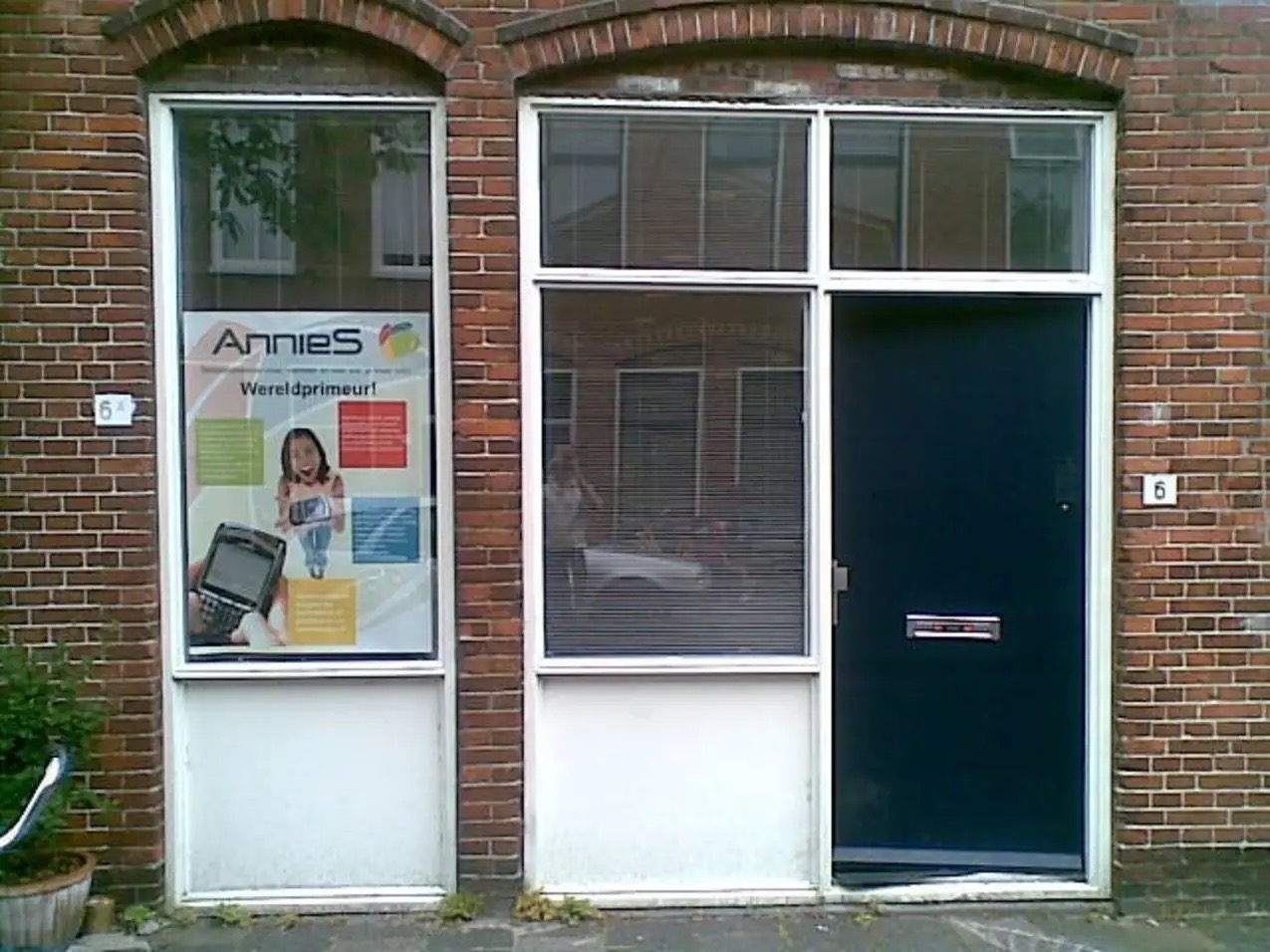
AnnieS archive · Groningen, 2009
The fork was a place before it became a lineage. Real-time text, relay, numbering and emergency calling became working material inside one small office.
Groningen · 2009
AnnieS in Groningen, 2009. Period photograph from the recovered archive.
Inside
The visual record grounds the 2009 telecommunications work in the small operating environment where it actually happened.
A failed deal can still create the route that matters.
Evidence note
Recovered 2009 correspondence and later archival reconstruction.
July 14, 2009The near miss Documented
PeopleSystemsInstitutions
July 14, 2009: “Good thing we didn’t take a job at Viable!”#
As the American VRS company entered a federal fraud crisis, the collapse was not abstract industry news. People inside the story came from an existing Deaf social world, and the company represented a path that had nearly become a career path.
Technical innovation and institutional failure can coexist. The hard work is learning to tell them apart.
Evidence note
Contemporaneous July 2009 email plus public court record and recovered correspondence.
DirectEye deliberately carried forward significant technical ideas from Viable while refusing to inherit the failed institution around them. The abstraction acquired a shape: a portable visual endpoint, filed as VPAD, drawn and promoted as a real product before it was a real product.
Pilot discussions joined telephone numbering, interpreter workflows, video, operational records, IVèS logs, reconciliation, cost, training, and proof-of-concept discipline. By late 2011 the project had an office in Ghent, a Flemish and Francophone interpreting service, and outside institutional recognition.
DirectEye device archive · the endpoint made explicit
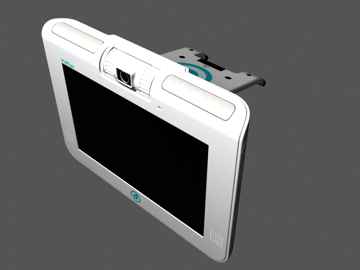
The strongest surviving DirectEye artifact is not a photograph. It is the device itself: an annotated portable videophone on a kickstand, with camera, speaker grilles, call key and stand drawn as deliberate design decisions.
VPAD · portable visual endpoint
The DirectEye VPAD sheet, recovered from the archive. The printed Dutch slogan, “communicatie toeganglijkheid [sic] maken,” translates as “make communication accessible.” The drawing is the architecture argument in one object: a self-contained visual endpoint that does not assume a telephone.
VidEye render · January 2011
A January 2011 DirectEye rendering of the endpoint: mount, lens and bezel resolved. The surviving VPAD sheet is undated, so no elapsed-time claim is made between the two artifacts.
What the architecture actually joined
The pilot discussions were not about a handset. They were about the layers a Deaf-usable telecommunications service has to own at once.
Telephone numbering
Interpreter workflow
Video endpoints
Operational records
IVèS logs
Reconciliation
Cost model
Training
Proof-of-concept discipline
Secondary material · 2010–11
Around the device: market promotion, an external institutional program, and a physical operating footprint.
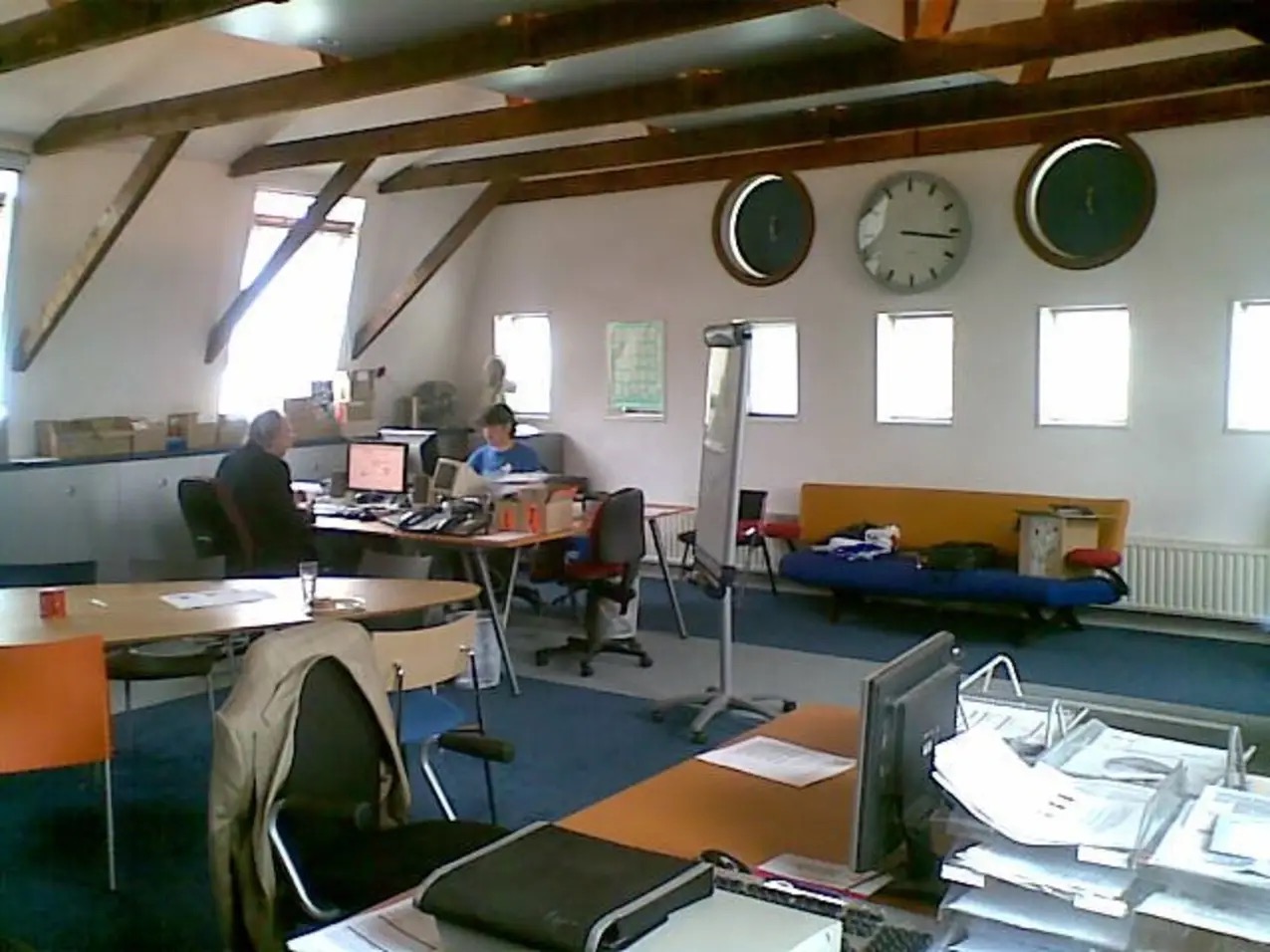
Promotion · Flanders, 2010
Announcing a Flanders launch for autumn 2010. The nonstandard Dutch on the period artifact is preserved as printed; standard Dutch would use “toegankelijkheid” and “in de herfst.”
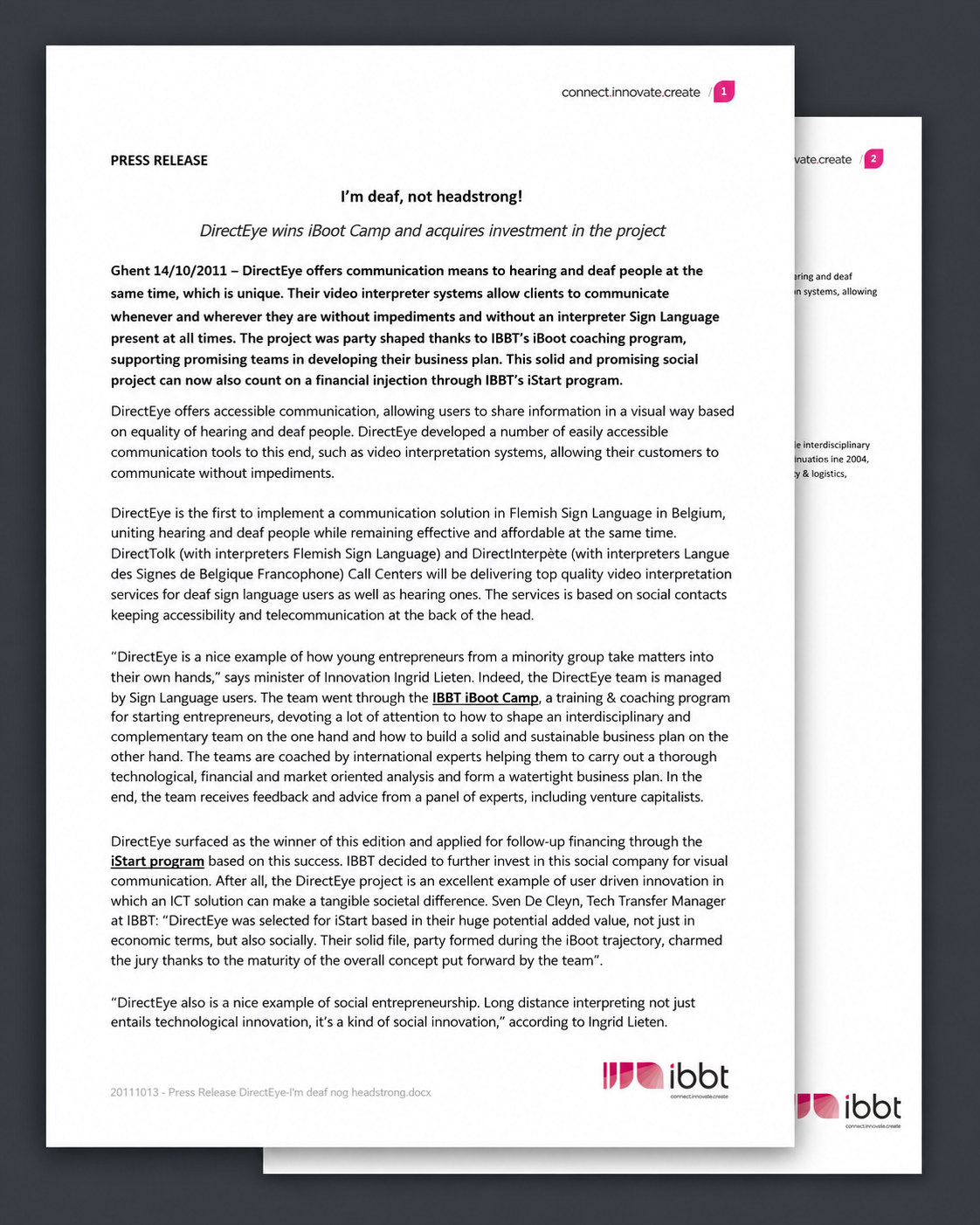
IBBT (now imec) press release · October 2011
Public recognition: DirectEye wins iBoot Camp and takes iStart investment.
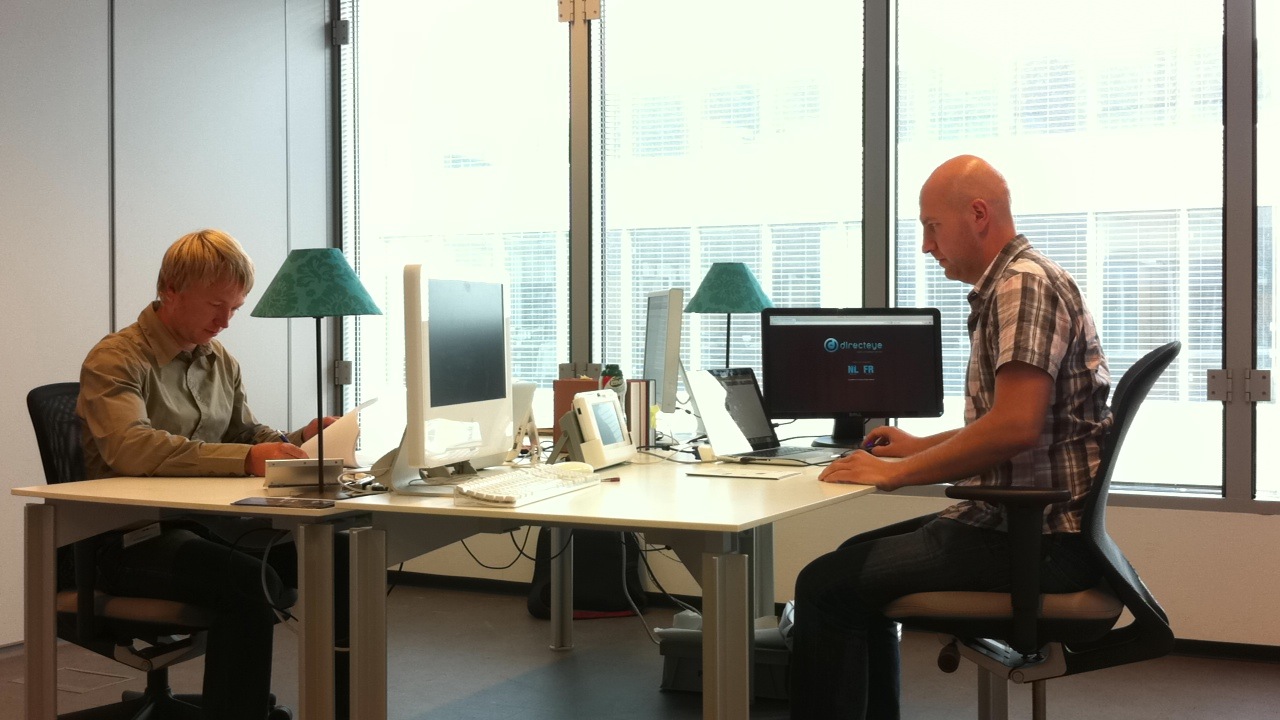
Ghent office · 2011
A physical operating footprint behind the telecom architecture. The right-hand monitor shows the DirectEye site opening with an NL / FR language choice.
First-person architectural provenance reinforced by a contemporaneous 2010 statement about carrying forward Viable innovations. The VPAD poster and the January 2011 VidEye render are recovered DirectEye design artifacts; the October 2011 IBBT press release is a public document.
Aug 17, 2010–Jun 2012The Hinge Documented
PeopleSystemsInstitutionsEvidence
Aug 17, 2010–Jun 2012: The field becomes the job.#
TDI was not merely the site of the 2011 conference. Beginning August 17, 2010, McConnell worked inside the institution as Member Services & Advertising Manager. The surviving record shows the practical layer underneath advocacy: member outreach, advertising and sponsorship, conference and program-book production, social-media administration, captioning complaint follow-through, relay and carrier monitoring, and the circulation of technical and policy intelligence.
That position also placed the European telecommunications work from AnnieS and DirectEye beside the U.S. accessibility-policy world in real time. A December 2010 exchange with Raymond Kruyer about real-time text and emerging NG911 work explicitly asked what partners, business model, commitment, and role TDI might have. By June 2011, the conference problem set was not being encountered from the outside; it was the operating environment.
The hinge was institutional: technology, community experience, advocacy, and regulation became one working field.
Evidence note
A recovered July–August 2010 recruitment thread and August 11 hiring letter establish an August 17, 2010 start; TDI World mastheads publicly corroborate the staff role; the 2011 business-meeting transcript introduces McConnell as TDI’s Advertising and Member Services Manager; operational correspondence and program materials document the breadth of the work; payroll and departure correspondence support June 2012 as the end of formal employment. The archive does not assign personal authorship of TDI policy positions.
The recovered TDI corpus contains 33 CART transcripts from the 19th Biennial TDI International Conference, held June 2–4, 2011. Read together, they are not a conference program. They are a field stating its own requirements out loud, years before most of them had systems attached.
The transcripts show practitioners, engineers, regulators and consumers working the same unresolved problem set from different sides: how incompatible video services could interoperate, what functional equivalency has to mean in practice, how Total Conversation and NG911 fit together, why mobile VRS latency and call recovery kept failing, and what a minimum interoperability standard would even be measured against.
TDI conference archive · June 2011
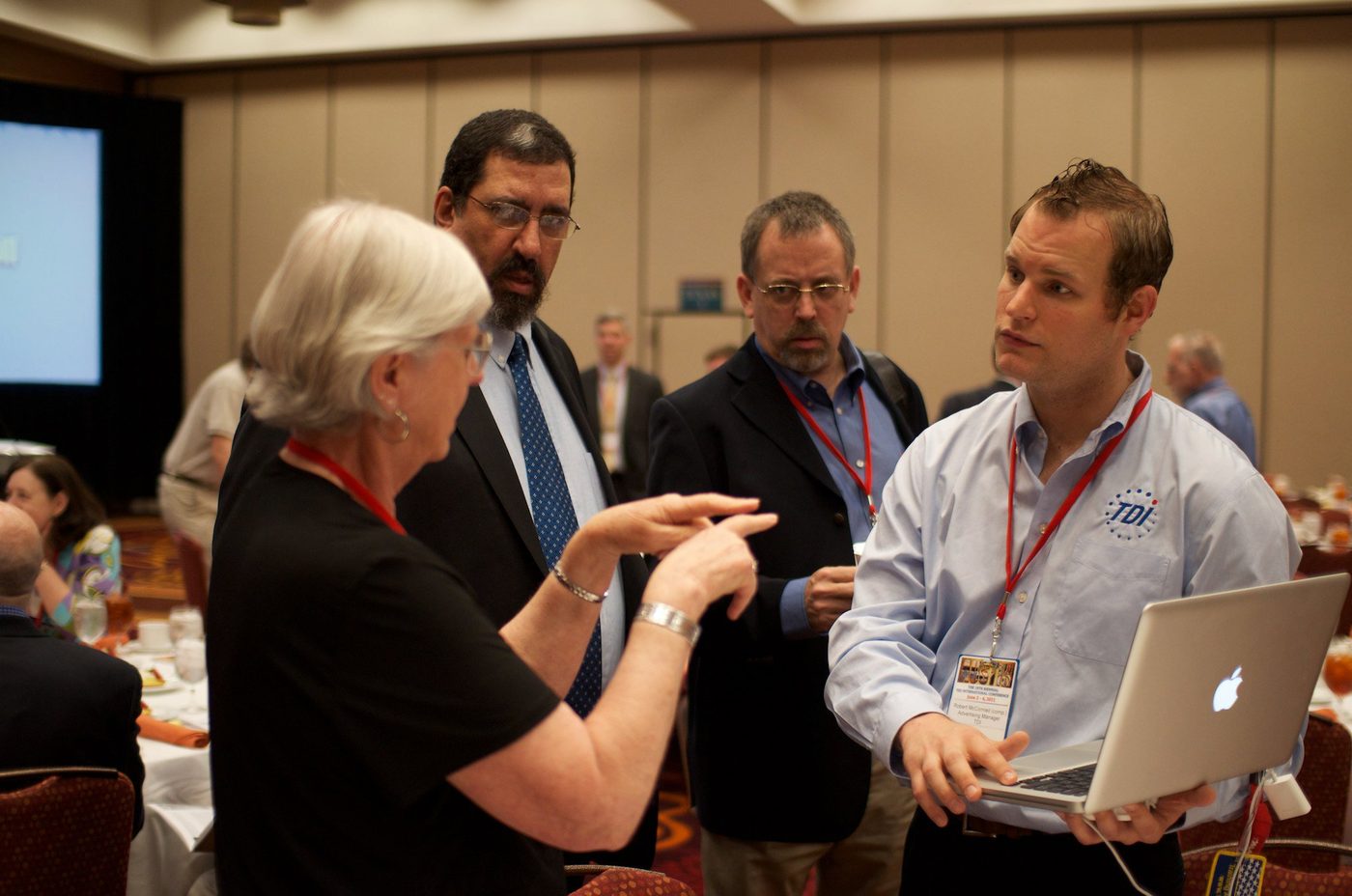
The same conference, photographed. These images later traveled forward into the June 2012 photo package sent to the RIM/BlackBerry production team — which is how they survived at all.
The field · signing around a laptop
The whole argument in one frame: language, people and computing in the same conversation, with the machine held rather than sat behind. The badge reads “The 19th Biennial TDI International Conference · June 2–4, 2011.”
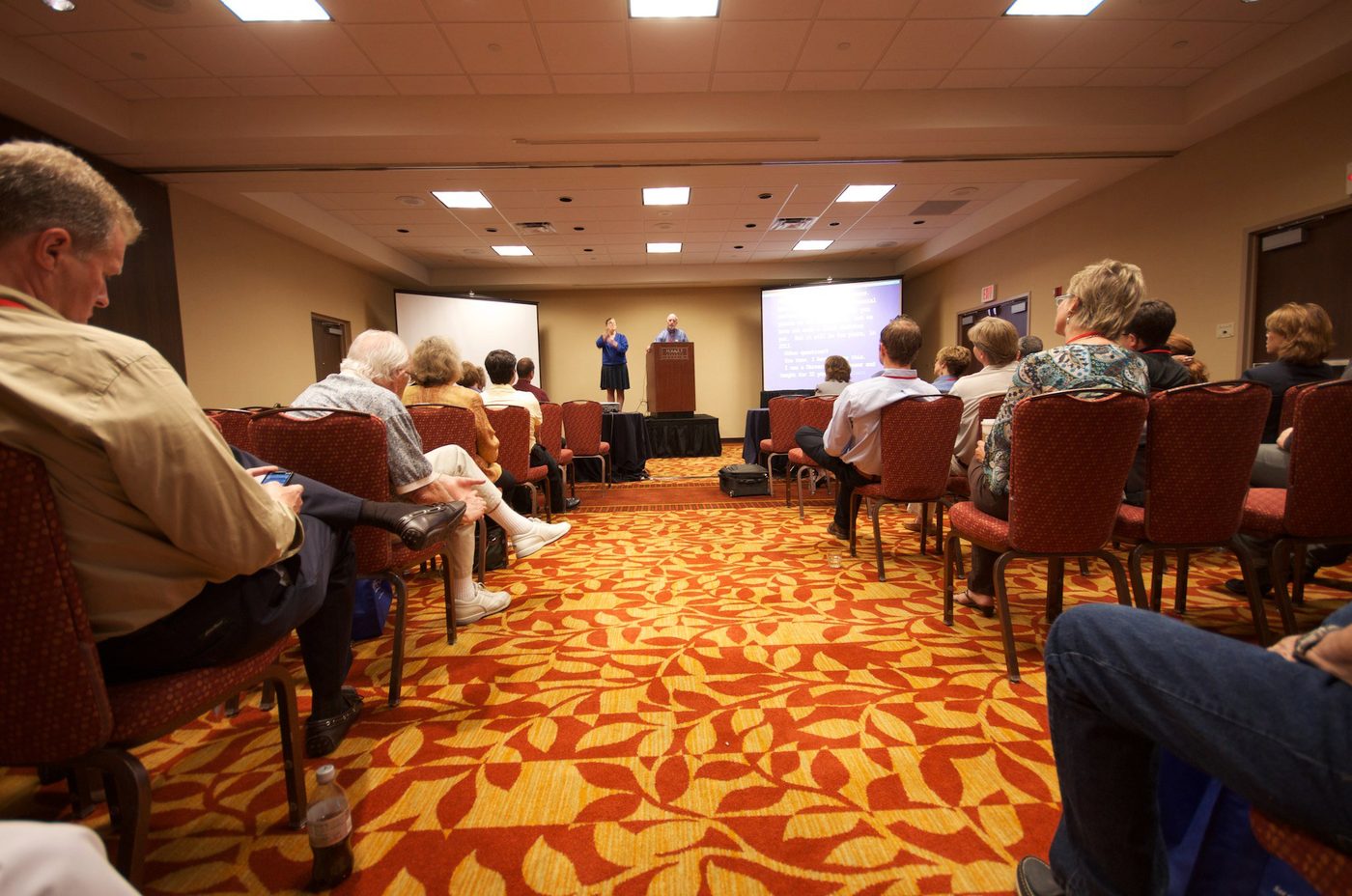
The room
Presenter, interpreter and a live captioning screen — the working conditions under which those 33 transcripts were produced.
Mobile, 2011
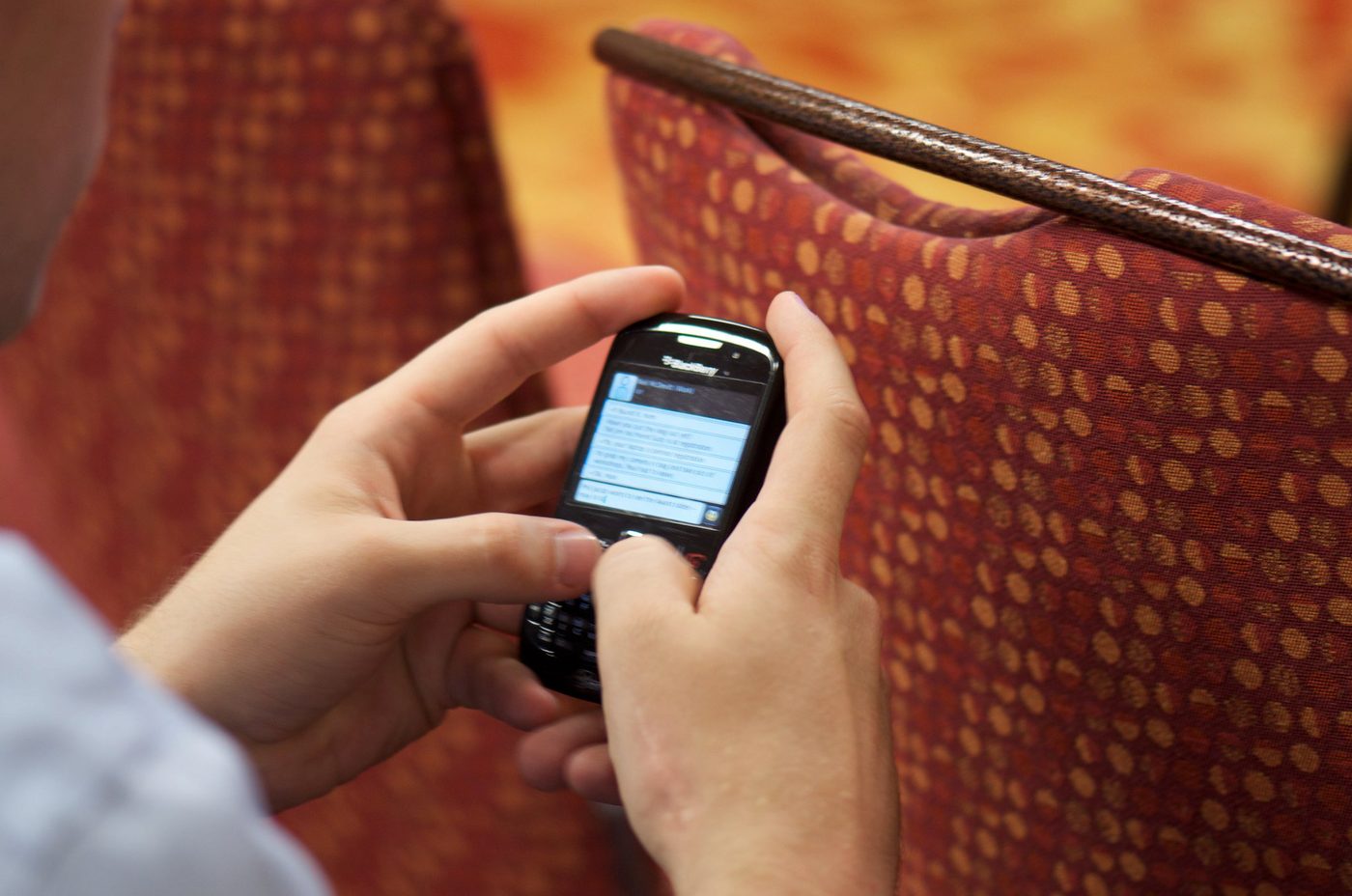
Mobile latency and recovery, held in two hands.
Recovered corpus · the problem set, in the room
Everything the next fifteen years would have to build, named at once.
Each phrase below is something the 2011 transcripts are visibly wrestling with. None of them had a settled answer in the room.
Interoperable videoconferencing
SIP / H.323 / H.264 interoperability
Functional equivalency
Total Conversation / NG911
Mobile VRS latency + recovery
Minimum interoperability standards
Consumer experience as regulatory evidence
A singular test bed
We need to have a singular test bed for all equipment.Recovered CART transcript · TDI 19th Biennial International Conference, June 2011
Nothing here proves lineage. It proves the problem set was already explicit — and already stated by the people who would have to live with the answer.
Evidence note
Thirty-three recovered CART transcripts from the TDI 19th Biennial International Conference, June 2–4, 2011; the conference dates are independently legible on the badge in the period photographs above. This page makes no causal claim that the conference produced later FCC systems. “Big Bang” is a chapter name describing a requirements explosion in the record, not an assertion of lineage.
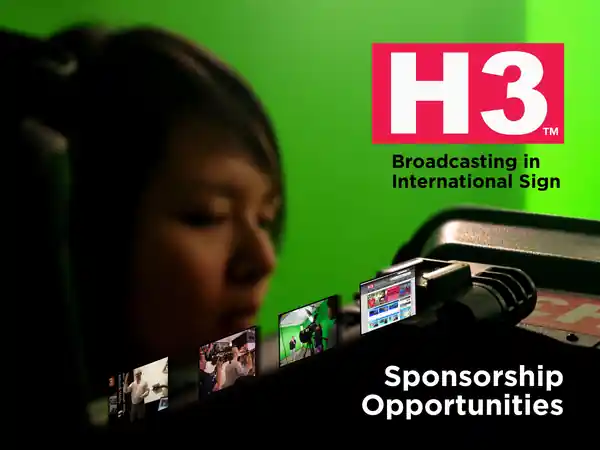
At Deaf411, McConnell helped stand up DeafWire with H3 Network Media Alliance: source gathering, fact verification, scripts built for signers and captions, visual assets, production handoff, and Internet-native signed-video distribution. H3 described itself, in its own period materials, as broadcasting in International Sign.
The same year, Research In Motion flew him to Waterloo for a professional BlackBerry video, and Deaf411/H3 later pitched BlackBerry 10 into a global International Sign media ecosystem. The 2011 TDI photographs above are one visual bridge into that relationship because they were selected for the June 2012 RIM production package; the H3/DeafWire documentary record itself is much broader.
H3 media kit · October 23, 2012
H3 Media-Programming · Rev. 9/2012
Page 1 of the recovered H3 Media-Programming.pdf. Direct render of the period document.
What actually survives
The corpus is broad enough to reconstruct the operating system behind the media kit, not merely its visual identity.
Pre-launch demo review
Launch-day production correspondence
Scripts + source verification
Signer + caption workflow
Visual asset packages
FTP / upload handoff
Media kits + rate cards
Advertising + sponsorship agreements
vTiger CRM + sales reports
RIM / BlackBerry production trail
2013–14 project-planning artifacts
Access is not complete when information exists. It needs a production and distribution system that can carry language, verification, visuals, and trust.
Evidence note
Recovered March–May 2012 Deaf411/H3 correspondence documents pre-launch review, the April 9 launch, seven April production sessions, scripts, source verification, visual assets and FTP handoff. Surviving 2012 H3 media kits and rate agreements preserve programming, advertising inventory and sponsorship. June 2012 RIM records preserve the Waterloo production; late-2012 sales and BlackBerry 10 correspondence plus vTiger records preserve commercial operations; 2013–14 correspondence preserves later production and organizational-planning work.
Less than a month after joining the FCC, a contemporary U.S. VRS architecture discussion and the old 2009 IVèS/DirectEye material were forwarded into the same new FCC inbox only hours apart. Two technical worlds that had developed separately were suddenly sitting inside one institutional context.
The archive does not prove causation. It proves proximity — and shows exactly when old architecture re-entered the field of view.
The FCC’s ASL Consumer Support Line and ACE Direct turned a simple principle into an operating model: when the endpoints can communicate directly in the user’s language and modality, do not insert relay merely because the user is Deaf.
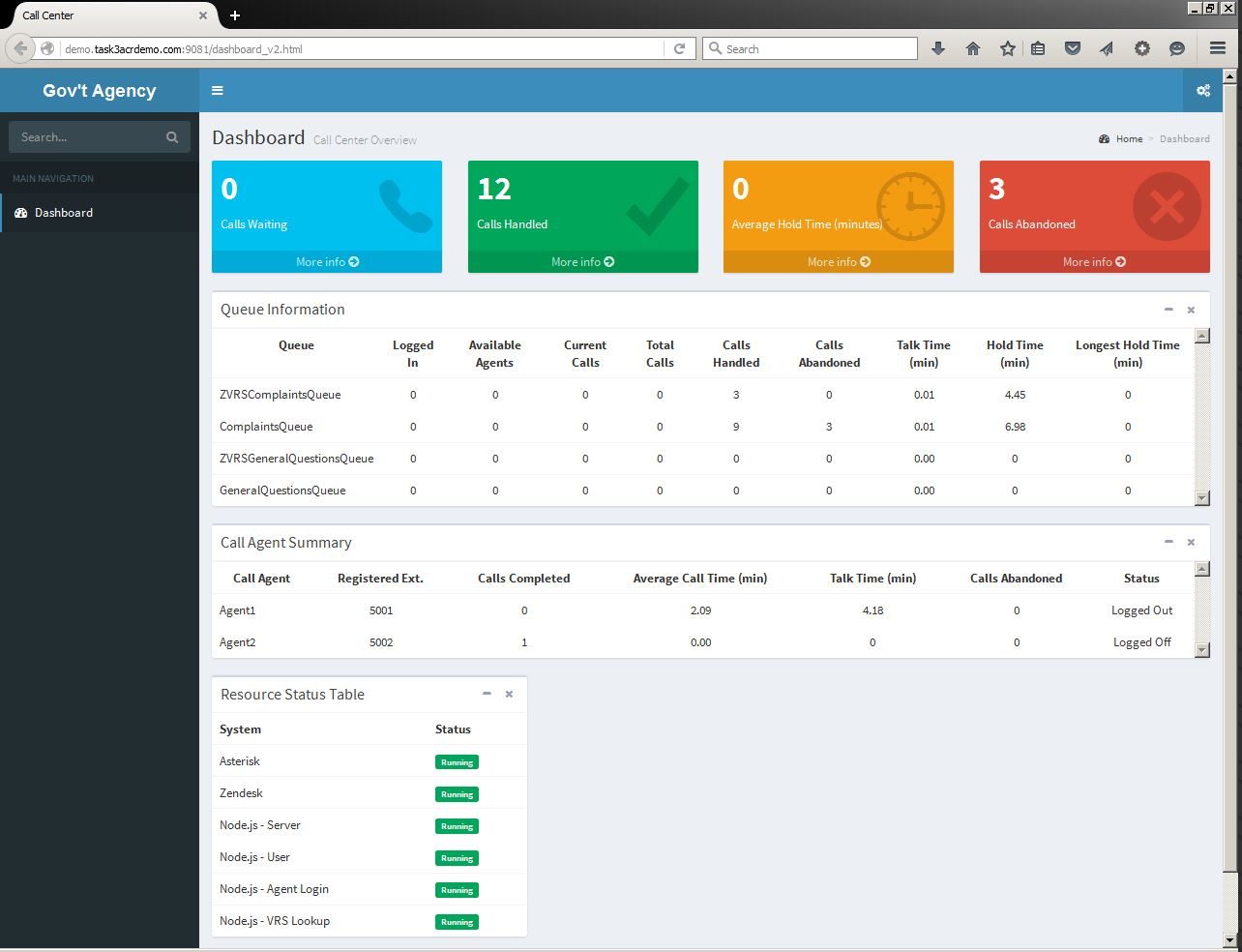
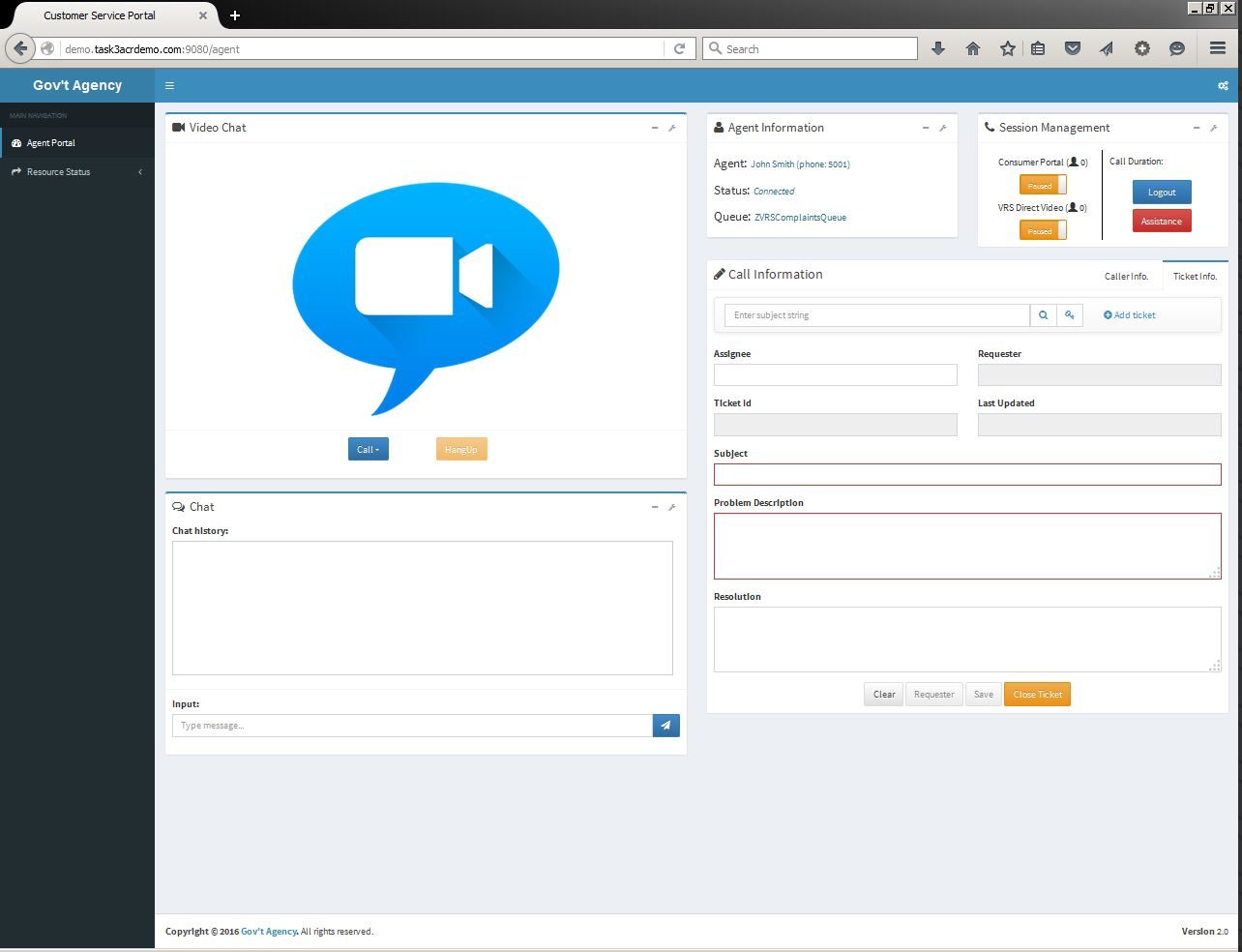
By July 2016 the principle had a running software stack behind it. The surviving screenshot set shows what an accessibility architecture looks like once it stops being a proposal: queue telemetry, agent workspaces, service health, and an endpoint.
ACE Direct interface archive · July 8, 2016
One system, three vantage points — and they are not equal. The dashboard is where the architecture becomes measurable, so it dominates. The agent workspace reports to it. The dialer is one endpoint among many.
ACE Direct · Call Center Overview · 2016-07-08
Operations · the system watching itself
Queue metrics — waiting, handled, hold time, abandoned — sit above per-queue and per-agent tables, with Asterisk, Zendesk and six Node.js services reporting status. Accessibility infrastructure had acquired telemetry.
ACE Direct · Customer Service Portal
The agent’s desk
Direct video, text chat, session management and ticket handling in a single workspace — an accessibility call answered inside ordinary customer-service furniture.
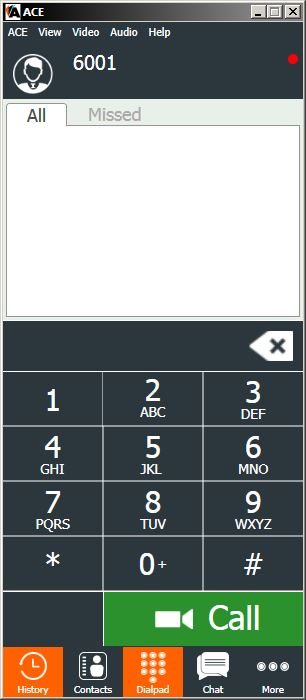
ACE · 6001
The endpoint
A keypad, a call list, and a video call key.
Systems echo · 2011 → 2016
The endpoint didn’t change. Its substrate did.
These two artifacts were made by different organizations on different continents for different regulatory regimes. The rhyme is not a claim of descent — it is what happens when the same requirement is solved twice.
January 2011 · Belgium
A device you could drop.
DirectEye VidEye
A keypad, a contact list and a call key — first cast in plastic, then compiled.
2016 · United States
A window you could ship.
ACE video dialer
Accessibility can remove unnecessary machinery instead of adding more of it.
Evidence note
FCC materials publicly identify Robert McConnell and David Schmidt with ACE Direct demonstrations and project work. A surviving July 8, 2016 screenshot set preserves the call-center dashboard, agent portal, and video dialer as they appeared in operation.
Direct Video Calling matured the concept into communications architecture: NANP numbers, directory lookup, routing, interoperability, unified customer-support numbers, and the ability to move from a direct video session into VRS when an interpreter becomes necessary.
State transition · 2017Service→Architecture→Ordinary enterprise workflow
01Service
Direct Video Calling has a name.
The September 28, 2017 FCC primer opens by framing direct videoconferencing as something an organization adopts, with essentials to be understood — not as an accommodation to be granted.
FCC DVC Primer · September 28, 2017
The opening slide of the surviving primer.
02Architecture
And then it has a spec.
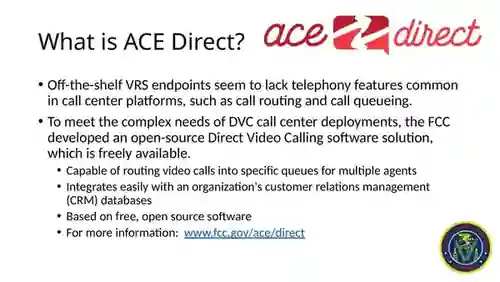
ACE Direct is described as an open-source Direct Video Calling solution: queue routing, CRM integration, scalability. The service has become a set of components other people can implement.
FCC DVC Primer · “What is ACE Direct?”
Queue routing, CRM integration, scalability, and an open-source base — the service described as components other people can implement.
03Ordinary enterprise workflow
And then it stops being remarkable.
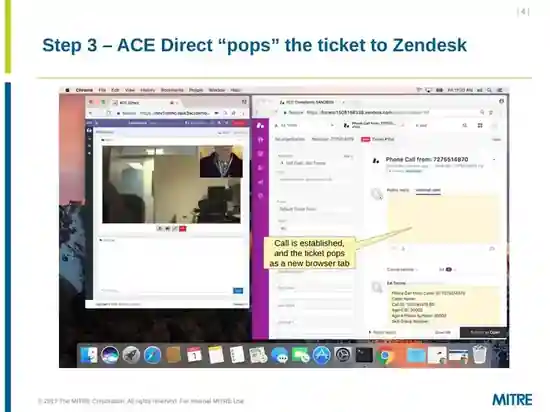
In the December 2017 MITRE demonstration, an active ACE Direct video call pops the matching Zendesk ticket for the agent. There is no accessibility ceremony in that step. It is a CRM integration behaving exactly as a CRM integration behaves.
This is the frame where video stops looking like special accessibility technology and starts looking like contact-center infrastructure.
MITRE Zendesk “Pop” demo · December 2017
Step 3 of the December 2017 MITRE demonstration.
Number → lookup → route → direct session → relay only when required.
Evidence note
The surviving FCC DVC Primer dated September 28, 2017 preserves the architecture and ACE Direct operating model. A December 2017 MITRE Zendesk “Pop” demo preserves the CRM integration workflow. FCC 19-39, adopted May 9 and released May 15, 2019 in CG Docket Nos. 10-51 and 03-123, supplies the public regulatory anchor and requires a DVC customer-support center to be able to convert an in-progress point-to-point video call into VRS when a hearing party must be added.
The most radical outcome available to an accessibility system is to become unremarkable.
Number → lookup → routeRelay only when requiredCRM integration, nothing more
2018–19Generalization Documented
SystemsInstitutions
2018–19: What if video behaved like the telephone network?#
The NANC Interoperable Video Calling work expanded the question beyond a Deaf customer-service use case: how could telephone-number-based interoperable video calling work across otherwise incompatible services and equipment?
An accessibility architecture becomes a general communications architecture when the special case reveals the missing primitive.
Evidence note
Public NANC working-group record; McConnell served as facilitator and presented the group’s findings to the Council.
The next move is conceptual: integrated video communications stop being treated as a separate Deaf technology problem. Accessibility capabilities increasingly attach to mainstream conferencing and multimodal communications systems themselves.
The best accessibility layer eventually becomes indistinguishable from the communications layer.
Evidence note
Working regulatory genealogy across Part 14, IVCS, relay, video communications, and later Commission proceedings.
From here the visual record changes character. Standards work, routing decisions and regulatory architecture survive as orders, filings, diagrams, presentations and captured source pages more often than photographs.
That does not make the record visually empty. The artifacts themselves become the imagery: show the authentic record where it survives, and an explicit citation where it does not. Nothing invented.
The Commission’s 988 work explicitly considered direct video calling to the national crisis line and cited the DVC architecture. A concept born in accessible customer service had escaped its original use case.
A mature accessibility primitive can travel into infrastructure no one initially designed it for.
Evidence note
FCC 20-100, including its Direct Video Calling to 988 discussion.
2020–22: FedRelay wasn’t deleted. The boundary around it was.#
Federal relay functions that already existed in the national TRS ecosystem migrated out of a bespoke federal acquisition wrapper. Other functions moved to ordinary acquisition channels. The accessibility requirement remained; redundant institutional machinery did not.
Mainstreaming does not mean erasing access. It means moving the capability into the infrastructure that should have owned it all along.
Evidence note
GSA transition record plus surviving cross-agency transition materials.
Interoperability and relay modernization force a different institutional posture. Provider assertion is not enough. Claims have to be testable by a technically neutral party under repeatable conditions.
The 2011 transcripts had already asked for exactly this, in exactly these words: a singular test bed for all equipment. The archive does not show a line from that request to this posture. It shows the request outliving the conference.
The unit of trust shifts from “they say it works” to “we can reproduce the result.”
Evidence note
TRS testing and national-lab work in the reconstructed FCC chronology; this page intentionally avoids over-precise dating where the archival sequence is still being resolved. The relationship to the 2011 request is thematic, not causal.
Emergency communications expose the weakness of checklist accessibility. A warning can technically exist and still fail. The meaningful question is whether a person received it, understood it, trusted it, and could act before the opportunity disappeared.
Conformance is an input. Human outcome is the mission.
Evidence note
Emergency Information Access Burden Index and ClearFrame research program.
The current synthesis joins accessibility, experiment orchestration, evidence, replay, provenance, cybersecurity, GRC, and authorization. The goal is not another compliance dashboard. It is an environment where a claim can be tested, reproduced, inspected, and turned into defensible evidence.
The arc closes: right → governance → architecture → interoperability → measurement → assurance.
Evidence note
Active Accessibility Proving Ground and assurance architecture. This is current work, not retrospective history.
Twenty years later, the “accessibility feature” has disappeared.
What remains is a communications system with more of its assumptions made explicit.
01People
02Language
03Interpreting
04Endpoints
05Identity
06Numbering
07Routing
08Interoperability
09Networks
10Regulation
11Testing
12Evidence
13Governance
14Trust
The line through all of it
What does the institution need in order to trust the system?
First the answer was legitimacy. Then governance. Then architecture. Then interoperability. Then neutral measurement. The current answer is stronger still: the system should emit enough evidence to make its important claims independently checkable.
The Deaf-First Stack
The thesis appeared before the story had been excavated.
In March 2026, a fake O’Reilly cover called the idea The Deaf-First Stack: Building Systems That Actually Mean It. The archive later revealed the historical narrative underneath it.
Karen’s generation argued that the right must exist. The unfinished work is building the stack capable of honoring it.
![DirectEye VPAD poster: an illustrated tablet-style video endpoint on a kickstand, with camera, speaker grilles and a call key, above the Direct Eye logo and the printed slogan “communicatie toeganglijkheid [sic] maken.”](/timeline/directeye/vpad-promo.jpg)
![A DirectEye banner reading “communicatie toeganglijkheid [sic] maken. komen naar Vlaanderen in herfst [sic] van 2010!” over a coloured light-wave graphic.](/timeline/directeye/flanders-promo-2010.jpg)